

Make your international studies easier to understand for employers in Ireland. Find out more about recognition of QQI qualifications, including how you can add information about equivalence and foreign qualifications.
Obtaining a diploma from overseas opens many doors for you and will bring some exciting career opportunities, but the task of describing its worth to employers in Ireland might prove difficult. Indeed, there are different types of qualification names and grading scales in place in different education systems.
This does not mean that international education is any less important. What matters is presenting it in a clear way using well-recognised comparisons and facts, which would help employers understand the candidate’s educational background easily.
For Ireland, the information provided by NARIC Ireland and QQI is really helpful when trying to find equivalents to your diplomas. Understanding this system will help you compose a better CV and get an advantage in applications.
Why Foreign Qualifications Need Clear Presentation On An Irish CV
Employers in Ireland may get applications from graduates trained in more than one country. There could be a situation where a degree recognised in another educational system is known differently in Ireland, and it is very hard for recruiters to know how much academic worth there is in such a degree.
Good presentation eliminates all forms of uncertainty and makes it easier for employers to evaluate the qualifications of the applicant.
Candidates don’t need to assume that the recruiters know what the degree means, but rather, they present the qualification together with the awarding institution.
Good presentation of education will reflect good attention to detail as well. This way, international candidates are able to explain their academic background without misleading their qualifications or employers.
How QQI Helps Employers Understand International Education
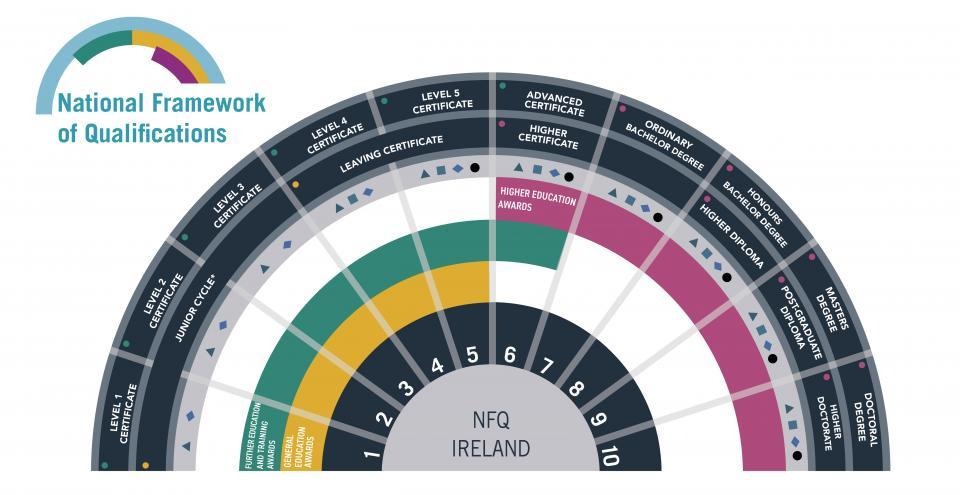
Quality and Qualifications Ireland (QQI) can be a useful resource for people to find out about qualifications obtained outside Ireland. Where possible, QQI, through NARIC Ireland, supplies information which helps to compare foreign academic qualifications with awards and levels on the National Framework of Qualifications (NFQ) in Ireland.
Comparability statements are used to present these comparisons. They describe the overall academic status of a specific foreign qualification in the context of the Irish education system, enabling employers, education providers and applicants to have an overall perception of the qualification.
These are just guidelines for recognising the skills and are not legal determinations or automatic eligibility to work. The employer and the appropriate professionals make the hiring decisions according to their requirements.
Help Recruiters Recognise Your Education Through Professional CV Formatting
An international CV is easier to read because of the clear CV layout. The education section should be consistently formatted, have readable headings, and provide sufficient line spacing between degree titles, institutions, and recognition.
There should not be much emphasis on describing the education system of one’s country in detail. It would usually be more sensible to write a small note about the qualification and its equivalent in Ireland than to describe the educational structure.
Spelling, dates, and names of institutions are to be checked in professional presentation. Professional CV writing services in Ireland can be utilised by many candidates to tweak the structure of their CV and to enable local recruiters to understand their educational background internationally.
How To Add QQI Equivalence To The Education Section
The original qualification should be easily identifiable in the education section. The candidate should start with the official academic degree title, followed by the name of the institution, country, and year awarded, and should adhere to consistency with the academic documents.
Where a comparability statement is available, its relevant Irish NFQ comparison can be included on a separate line. This provides recruiters with some context rather than an alternate qualification and doesn’t imply that an Irish award was actually obtained.
If the candidate has a foreign undergraduate degree, they can list their degree using the original name followed by reference to the appropriate QQI/NARIC equivalency. This ensures that the information provided is clear, accurate, and straightforward.
Make International Degrees Easier To Understand With Accurate Details
There is a possibility that a qualification title does not fully convey knowledge acquired over many years’ study. Including a brief note on subjects of interest, academic projects, or specialism may help employers make these links between candidates’ education and the advertised job.
For instance, if a business graduate is applying for an administrative or marketing position, they may include marketing, financial management and business communication in their resume. These details help to give a better sense of the candidate’s academic readiness.
The same method can be used with technical and creative qualifications. Applicants are not required to include all of the subjects they have studied, but should choose information that is relevant to the job and illustrates useful knowledge.
Connect Foreign Qualifications With Relevant Skills And Experience
It’s more meaningful when candidates support the significance of education with their working skills. While a degree can give you the theory, you also need to know how that theory can apply to real-world work tasks.
For example, a graduate with information technology skills can integrate their knowledge with software skills, problem-solving, and technical projects. An individual who has a degree in business from another country could focus on research and the skills in communicating and planning that they have acquired as part of their degree.
This link gives the CV a sense beyond just academic accomplishments. It demonstrates to employers how international education has equipped the candidate to take on practical duties, and the ways in which the skills can be applied to benefit the organisation.
Keep Supporting Documents Ready For A Stronger Application

A well-organised application can make it easier for the employer to gauge the educational background of the candidate. It is important that applicants have a hard copy of their degree certificate, academic transcripts, and relevant recognition statements in a secure and easy-to-grab folder.
Employers or relevant authorities may require appropriate translations of documents if they are not in English. The candidates are advised to refer to the instructions before arranging translations, as instructions may vary depending on the organisation and purpose.
The official statement may also be presented as a supporting document upon request. Ensure the information in the CV is consistent with the information on the certificate as well as any other record to avoid unnecessary questions during recruitment.
Give Your International Experience A Stronger First Impression
An overseas qualification is just one element of the candidate’s career narrative. When included alongside skills and achievements, it can make a world of difference in the eyes of Irish employers when reviewing an application.
A structured CV facilitates the understanding of the relationship between international learning and work skills by the recruiter.
If candidates require assistance with the presentation, they may visit Cvireland.com for professional CV assistance. A well-structured application that focuses on the appropriate information and is formatted consistently can be more interesting and will allow international professionals to present their strengths effectively.
Frequently Asked Questions
What Is QQI Equivalence in Ireland?
QQI equivalence mostly pertains to recognition advice obtained from NARIC Ireland. This means that foreign academic achievements will be compared with the award type and NFQ level of an equivalent Irish achievement.
Is a QQI Comparability Statement Free?
Yes. It can be accessed for free by the candidate through the Foreign Qualifications Database of NARIC Ireland, and if the qualifications are not found in the database, the candidate can use an online application to request recognition advice.
Does QQI Equivalence Guarantee Employment in Ireland?
No. A comparability statement will tell you about the academic level of your foreign qualification, but there is no guarantee of employment or entry into an academic course or a regulated profession.
Can a Foreign Degree Be Included in an Irish CV without QQI Comparability?
Yes. The candidate can include their foreign degree in their CV without comparability advice. The candidate needs to ensure that they include the actual degree title, institution name, country, and year of award rather than just claiming Irish equivalence of their degree.
How Long Will It Take to Get QQI Recognition Advice?
According to QQI’s current advice, new comparability questions will take up to 12 weeks. The time varies according to the qualification and the amount of information available, so you should apply well before any employment deadlines.
Conclusion
When including foreign qualifications in an Irish CV, simply translating the names of the degrees will not be enough.
The candidates should be able to demonstrate what they have achieved academically and find credible information for the comparison of the qualifications they earned.
The QQI and NARIC Ireland provide helpful assistance in the form of comparability statements relating to the Irish NFQ. Still, candidates should know that academic comparison cannot be seen as a substitute for registration or assurance of employment.
The use of accurate details, proper formatting, and appropriate documentation will make it easier for international applicants to have their education evaluated. An organised CV will help ensure that their credentials get the recognition they deserve.