
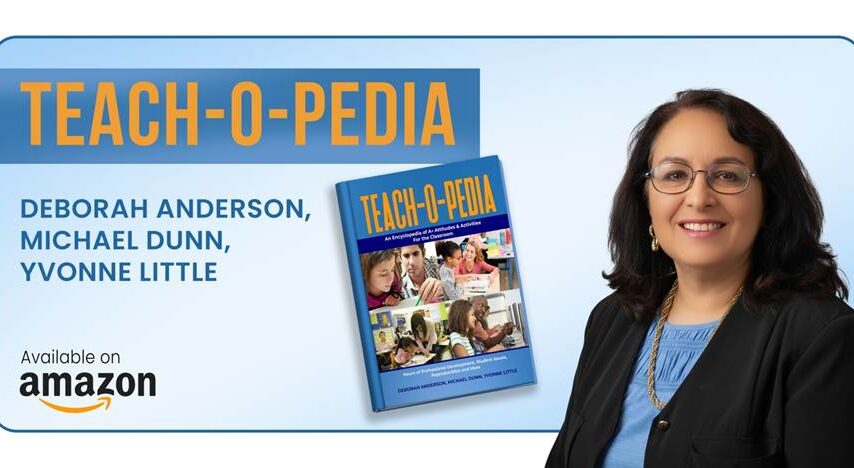

by Deborah Anderson, Educator
After more than four decades in education, from busy city schools to private academies, I have seen a lot. I have taught Music, English, Spanish, Social Studies, and more, at both elementary and secondary classes. Also, I have led schools and departments, mentoring teachers across every grade level. Along the way, I have earned seven certifications and pursued doctoral studies, but what I value most are the lessons learned from real classrooms, filled with real kids.
My own scholastic journey began as a student in the strong public schools of Edison and Metuchen, New Jersey, and stretched to communities across the country, including those struggling to stay afloat. These experiences shaped one clear truth: every student deserves the chance to learn in a school that values both the mind and the heart.
Lessons from the Classroom
In my early teaching years, I saw the best and worst of education. One school stood out for its innovation. Students there fluently spoke their newly-acquired world languages, using humor and slang like natives. In another, a teacher penalized sophisticated students for daring to use vocabulary beyond the textbook. The difference? One inspired curiosity. The other rewarded conformity while docking high achievers.
That contrast taught me something I have carried throughout my career: a healthy school does not teach only facts. It nurtures thought, creativity, and respect for all constituents.
A Motto That Still Maters
Back in graduate school, I discovered a quote from Effective Schools reformer Ron Edmonds that still rings true today:
“We can, whenever and wherever we choose, successfully teach all children… We already know more than we need to do this.”
If that is the case, why are so many schools still struggling? The issue has nothing to do with knowledge. It remains fully based on commitment to work within the process. We know what works. We just do not always do it.
When Reform Misses the Point
I once worked in a district that made national headlines for raising teacher pay to one of the highest in the country. It was meant to spark education reform. But while paychecks grew, student achievement continued to lag. Test scores, graduation rates, and reading levels stayed stagnant. The missing ingredient?
Heart – the kind that instills love for academics and passion for student achievement no matter what. Although the system had changed, the focus on students did not continue to grow.
True reform does not come from money alone. It comes from motivation, mentorship, and meaning.
The “School Bakery” and the “School Factory”
Too often, we treat schools like assembly lines, baking up identical “cookie-cutter” students or mass-producing “widgets” on a conveyor belt. But, education is not about manufacturing. It is human work. It takes time.
Students are not products, and staff members are not factory hands. They are people -unique, curious, emotional, and capable of greatness when met with respect and encouragement.
The Real Academic Exercise
If we truly want stronger schools, we must start with people, not programs. Vet the staff along a professional continuum. Support them as you train them to teach and to monitor progress, not just test. Invest in ethics, empathy, and expertise.
Money spent on flashy reforms cannot replace the simple act of caring, of knowing every student by name and helping them to daily connect knowledge to life. That is the kind of exercise schools really need.
The Research Reality
Education headlines can be misleading. Some reports suggest progress, but data tell a harder truth. As Forbes noted, low-performing students continue to fall further behind, even as others improve (Wexler, 2021).
The Nation’s Report Card backs that up. According to the National Assessment of Educational Progress (NAEP), only:
- 31% of eighth graders scored proficient in Science,
- 22% of twelfth graders in Math, and
- 35% in Reading.
If those were my classroom results, I would celebrate the growth but double down on the rest. Why? Because every percentage point represents a student who deserves better.
What Works and What Doesn’t
So, what’s the fix? Robert Pondiscio of the American Enterprise Institute put it plainly in The New York Post: “Stay with what works. Avoid fad curricula. Follow the science of reading.”
Trendy programs often promise miracles, but lasting success comes from consistent, research-based instruction and support, along with teachers who believe in their students.
Healthy Schools, Healthy Futures
A “healthy school” is about more than test scores. It is about balance, nutritious food, clean water, and strong mental health. The National Library of Medicine confirms that schools promoting wellbeing build students who thrive both academically and personally (Pulimeno et al., 2020).
In the end, I have found three guiding principles that define a truly healthy school:
- Open your mind to core values and ethics.
- Condition expectations for quality learning.
- Live with resolve to see every student succeed.
Schools that live by these ideals are not just places to learn. They are places to grow.
Final Thought
We already have the tools, research, and knowledge to teach every student well. What we need now is courage. The courage to care, to act, and to expect more.
The healthiest schools are not built merely on money or mandates. They are built on acceptance, academics, and meaning.
Works Cited:
- Edmonds, R. (1992). Quoted in Education Week.
- Pondiscio, R. (2025). “’Vibe-Based Literacy’ and Other Fads Destroyed Education for Our Kids.” New York Post, Sept. 10, 2025.
- Pulimeno, M., et al. (2020). “School as Ideal Setting to Promote Health and Wellbeing Among Young People.” National Library of Medicine.
- Wexler, N. (2021). “Scores for Low-Performing Students Get Steadily Worse.” Forbes.