
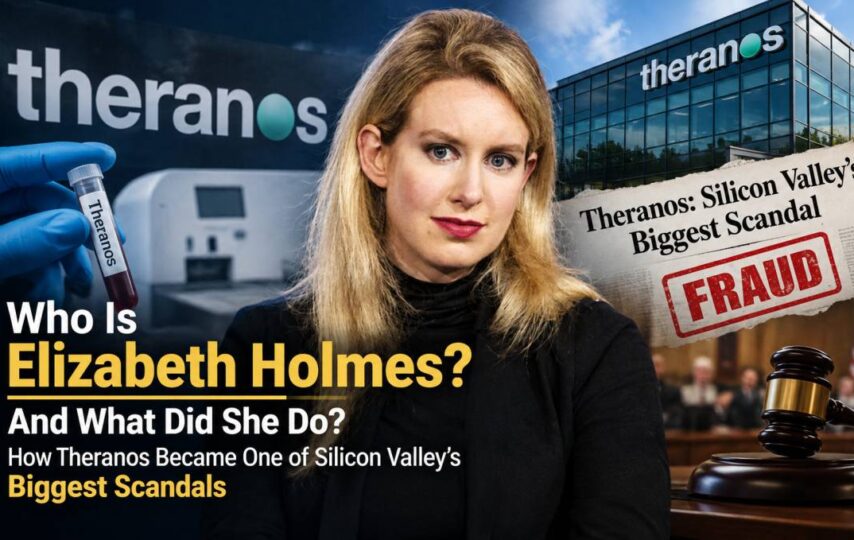

Elizabeth Holmes’ rise and fall became one of Silicon Valley’s most remarkable cautionary tales. As the founder of Theranos, she claimed to have created a new way of conducting medical tests. The company’s Edison device was supposedly capable of running hundreds of tests from only a few drops of blood. The promise made Holmes extraordinarily wealthy and influential. In 2014, Forbes valued Theranos at $4.5 billion and called the 30-year-old entrepreneur the world’s youngest self-made female billionaire.
The image began to break apart in 2015, when a Wall Street Journal investigation exposed serious problems with Theranos’ technology. The system Holmes had presented as a medical breakthrough was not producing the results she had promised. This was a sharp contradiction to her earlier description of the invention as “the most important thing humanity has ever built.”
Holmes eventually faced criminal charges over claims that she had deceived investors and patients. In 2022, she was convicted on four counts involving investors. The prosecution centred on years of misleading statements about Theranos and what its technology could actually accomplish.
So how did Holmes build such an extraordinary reputation before everything collapsed? Here’s what to know about Theranos, the claims that brought it down and the fraud that ultimately sent its founder to prison. For readers wondering, “Who is Elizabeth Holmes and what did she do,” her story is also explored in the upcoming documentary You Can See Everything, which features footage of Holmes.
How Elizabeth Holmes Turned a Blood-Testing Idea Into Theranos
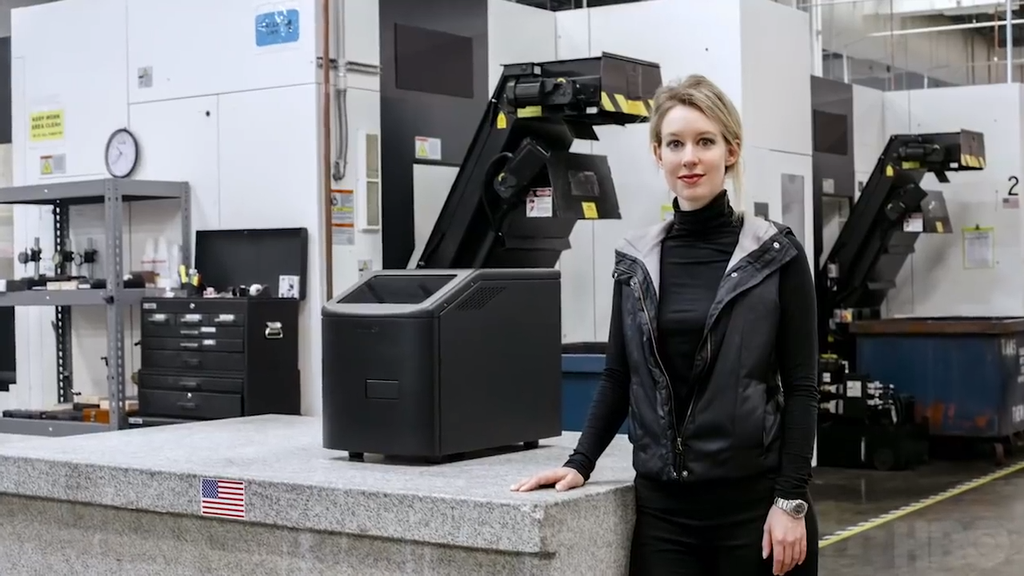
In 2003, Elizabeth Holmes left Stanford and turned her attention to a new idea: a company that would change the way people had their blood tested. Holmes later said that her own fear of blood helped shape the idea. In an interview with CNBC’s Squawk Box, she explained that she wanted medical testing to become easier for patients.
Her aim, she said, was to “build a system that could help make early detection and prevention [of diseases] a reality in our health-care system.” The centrepiece of the plan was the Edison. Theranos presented the device as a small blood-testing machine that could carry out many different tests from a finger prick.
Patients, according to the company, would no longer need large needles or several tubes of blood. The process would also cost less than traditional laboratory testing. But the machine was only part of the story. Theranos also needed money, and Holmes found plenty of it. To understand who Elizabeth Holmes is and what she did, it is also important to look at how Theranos attracted investors and built its extraordinary reputation.
Theranos Attracted Hundreds of Millions From Investors
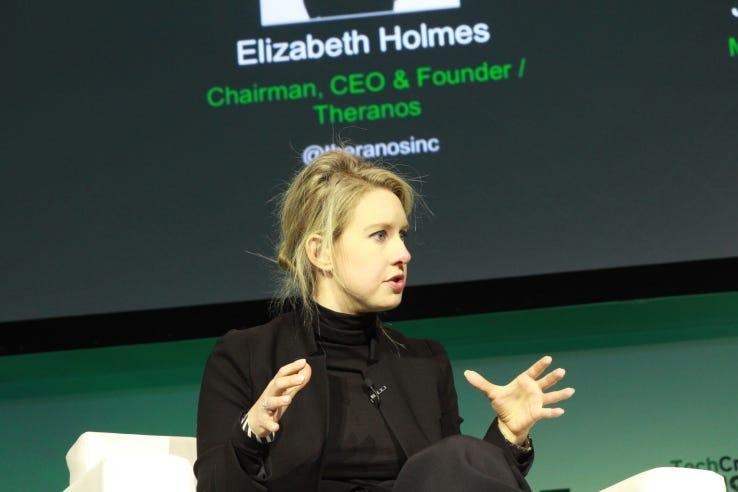
As the company attracted attention, investors began putting large sums into it. Holmes and Ramesh “Sunny” Balwani, the company’s former president, eventually collected more than $700 million. The SEC later alleged that they had misled investors about Theranos’ technology, business operations and financial condition. The company’s promises were enormous. Its ability to deliver them was another matter.
The Edison Device Failed to Deliver on Theranos’ Biggest Claims
Holmes repeatedly presented the Edison as a machine that could carry out a full range of blood tests from one finger prick. The reality was far narrower. The device could perform only a small selection of tests. According to the SEC, Theranos relied on machines made by other companies for “the vast majority of patient tests.”
Tyler Shultz, a former Theranos employee, later told 60 Minutes that he had never seen the Edison perform as Holmes claimed. This mattered because Holmes was telling investors that the system was already ready for use on patients.
The problems did not stop with the machine. Holmes and Balwani also made claims about Theranos’ connections to powerful companies and the U.S. military that did not stand up to scrutiny.
They claimed that the Department of Defense had used Theranos products in Afghanistan. It had not. They also gave investors reports carrying the logos of Pfizer and Schering-Plough. The reports gave the impression that the drug companies supported or had approved Theranos’ work. The CNBC later reported that this impression was false.
Holmes also painted an overly bright picture of the company’s finances. The Department of Justice said she told investors in 2015 that Theranos could bring in about $1 billion in revenue. She knew the real figure was likely to be “negligible or modest.” The numbers told a very different story from the one Holmes was selling.
Theranos Patients Faced the Consequences of Unreliable Test Results
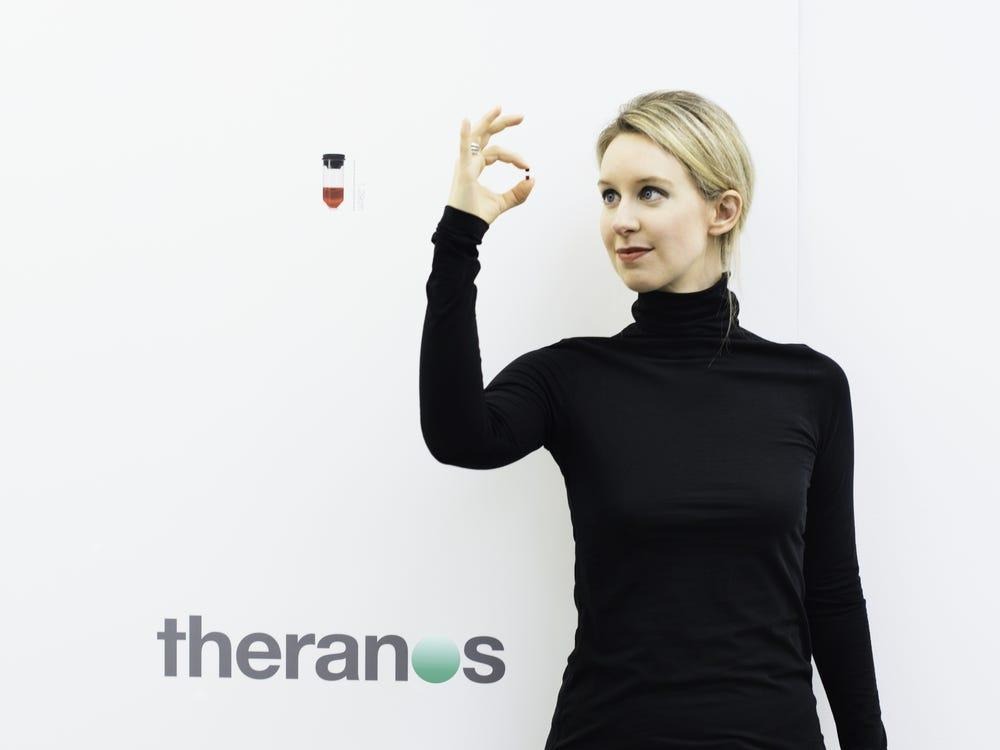
Who is Elizabeth Holmes and what did she do becomes an even more complicated question when the impact of Theranos’ claims on patients is considered. The damage caused by Theranos went beyond investors. Patients also paid the price when its testing system produced unreliable results.
No one knows exactly how many people received incorrect results. But the scale of the problem became clearer in Arizona. Fortune reported that Theranos later cancelled or amended more than 10% of the 7.8 million tests it had sold there.
Brittany Gould was one of the patients caught in the failure. Gould, a pregnant woman in Arizona, had already experienced three miscarriages, according to The Wall Street Journal.
In September 2014, she bought two Theranos tests from Walgreens. Both showed unusually low levels of a pregnancy hormone. Gould feared that she was about to lose another child. Her doctor did not rely on those results. Instead, Gould was sent to a different laboratory, where testing showed that her pregnancy was progressing normally. Eight months later, she gave birth to a healthy baby girl.
Gould later appeared as a witness at Holmes’ trial in September 2021, CNBC reported. Her experience illustrated the human consequences behind Theranos’ claims. A faulty result was not merely a bad number on a report. It could alter what a frightened patient believed about her own future.
Elizabeth Holmes Faced Federal Fraud Charges Over Theranos
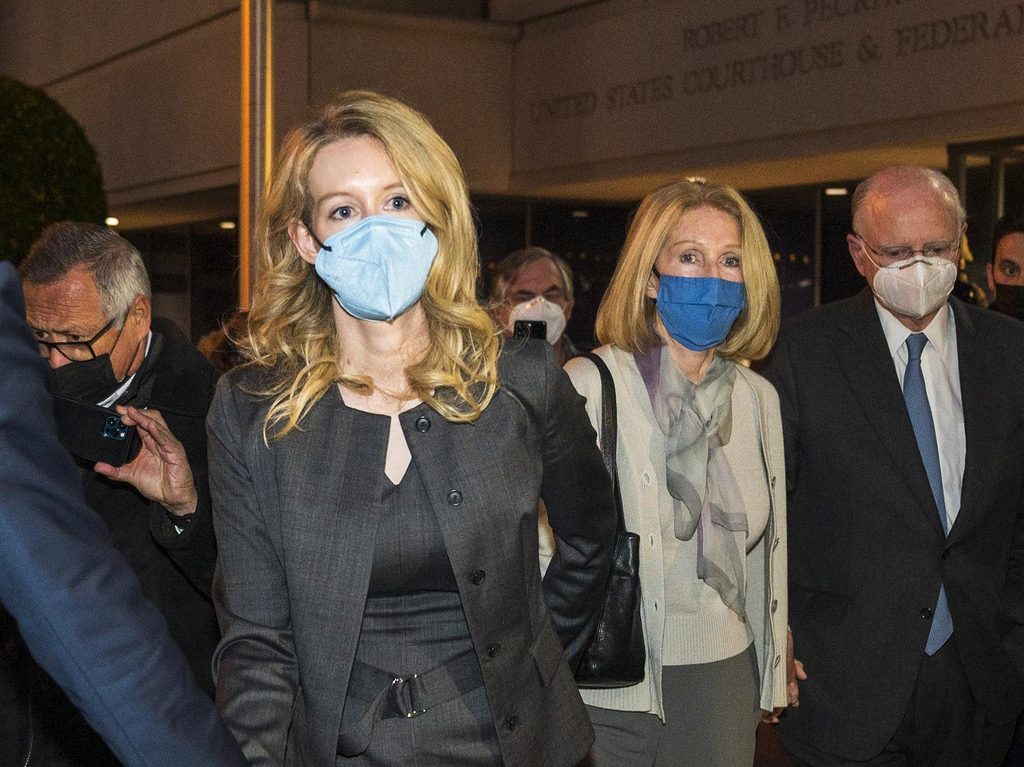
Ultimately, the answer to “Who Is Elizabeth Holmes And What Did She Do” is inseparable from the criminal case that followed Theranos’ collapse. In 2018, federal prosecutors indicted Holmes and Balwani on two counts of conspiracy to commit wire fraud and nine counts of wire fraud.
The DOJ said prosecutors were dealing with two related schemes. One targeted investors. The other targeted doctors and patients. Holmes and Balwani, prosecutors alleged, promoted Theranos while knowing that its system could not reliably perform some of the blood tests they claimed it could.
Holmes pleaded not guilty to all 11 charges. She did, however, admit in a 2017 SEC deposition that Theranos had “made mistakes,” according to ABC News.
The case eventually went to trial, but the proceedings did not move quickly. COVID-19 caused delays. Holmes’ pregnancy caused others. In 2022, a jury convicted her on three counts of wire fraud and one count of conspiracy to commit wire fraud.
The verdict was not a complete defeat on every charge. Jurors cleared Holmes on four counts involving patients. They could not agree on three other charges concerning investors, leaving those counts unresolved.
The court later sentenced Holmes to 11 years and three months in federal prison. She eventually received a reduction of about two years for good behavior. According to the FPC Bryan inmate database, her projected release date is Feb. 22, 2030.
The Theranos story had begun with promises of simpler medical testing. It ended with a prison sentence. The distance between those two points was measured in failed technology, disputed claims and a long criminal trial.
Conclusion
Elizabeth Holmes’ story is a cautionary tale about Silicon Valley: A good pitch can sometimes move faster than the tech itself. Theranos promised to revolutionize blood testing, lured in some of the nation’s most influential investors and made Holmes one of the most celebrated young entrepreneurs in America.
However, when the claims were put to the test, the remarkable story took a turn for the worse. Investors were led to believe that Holmes was a miracle worker, patients were given false results, and Holmes ended up with an 11-year-plus prison sentence and a criminal conviction.
FAQs
1. Who is Elizabeth Holmes?
Elizabeth Holmes is the founder of Theranos, which promised to revolutionize blood testing with its device, called the Edison. Her audacious claims brought in big investors and made her one of Silicon Valley’s most well-known entrepreneurs. Later, serious doubts arose regarding the technology.
2. What did Elizabeth Holmes do?
Holmes marketed Theranos and its Edison device as being able to conduct many blood tests on just a few drops. Later, prosecutors charged her with lying to investors regarding the company’s technology, business operations and finances. In 2022, she was found guilty of four charges relating to investors and sentenced to prison.
3. What was Theranos?
Theranos was a health care technology company established in 2003 by Elizabeth Holmes. It promised to be faster, easier and less invasive to test blood with a finger prick. It raised over $700 million from investors, but its technology did not offer the broad capabilities that Holmes had promised.
4. What happened to Elizabeth Holmes after the Theranos scandal?
In 2018, Holmes was charged with federal criminal wire fraud and conspiracy charges. She denied the charges. A jury found her guilty in 2022 on four investor-related charges. She was then sentenced to over 11 years in federal prison.