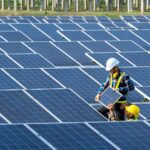


Solar energy employment continues to surge across the United States, and with it comes a reshaping of how and where clean energy careers are built. While the federal push for renewable energy has helped accelerate this shift, the real momentum is being driven by states that are investing in infrastructure, workforce training, and solar adoption. Freedom Forever reviews often highlight how the company has strategically aligned its workforce growth with many of the states leading in clean energy job creation. These choices reflect a broader trend as solar job growth is becoming an indicator not only of climate progress but also of local economic resilience.
This shift is no longer about isolated markets or coastal states. It is about how solar is changing workforce dynamics from Texas to Michigan, Arizona to Ohio. As we look closer at the data from 2025, a detailed picture begins to emerge that shows which states are leading in job creation, why they are succeeding, and how policy, training, and investment are working together to shape the future of solar careers.
Small States, Large Gains
Several less-populated states have experienced a remarkable percentage growth in solar jobs over the past year. Wyoming, Montana, and Alaska top the list for job growth rates, despite historically having limited solar infrastructure. For these regions, even a modest increase in project development can significantly affect employment numbers. Communities that previously had minimal ties to the renewable energy economy are now home to contractors, technicians, and trainers working in the solar sector.
This kind of growth has a ripple effect. When local employers hire and train for solar roles, other sectors often benefit. Housing demand rises. Small businesses see more foot traffic. Educational institutions expand programs to meet new workforce needs. These early wins set the stage for broader participation in the clean energy economy.
Workforce Built on Installed Capacity
States that rank high in installed solar capacity tend to show parallel growth in solar employment. California holds its position as the capacity leader, followed by Texas, Florida, and Arizona. These states have made substantial investments in both residential and utility-scale solar. Capacity alone does not generate jobs, but it creates ongoing demand for technicians, inspectors, customer service representatives, and maintenance personnel.
North Carolina, with a focus on rural solar development, has quietly moved into the upper tier of solar employment states. Local governments and utility providers in the state have worked with community colleges and labor organizations to ensure workforce readiness. This integrated approach supports both job creation and long-term career development.
Education and Training Make the Difference
Behind every solar job is a training opportunity. States that provide accessible education and technical instruction tend to outperform others in sustaining job growth. Arizona has become a model for clean energy education. Its community colleges offer certifications in photovoltaic technology, battery systems, and energy auditing. These credentials often require less than a year of study and lead to full-time employment.
Public-private partnerships in Illinois and North Carolina have shown similar results. Training programs aligned with local industry need to help workers move from unemployment or underemployment into the solar workforce. These programs are often supported by state grants or nonprofit coalitions, which makes them more accessible to underserved communities.
Growth Anchored by Manufacturing
Several states are experiencing dual benefits by hosting both solar installations and manufacturing facilities. Ohio and Georgia stand out in this regard. Ohio’s investment in solar panel production has brought new life to industrial corridors, while Georgia’s manufacturing sector is producing components for both domestic use and export.
Manufacturing creates jobs in assembly, logistics, quality control, and operations management. These roles are often located in counties that have lost factory employment in other sectors, such as automotive or steel. The ability to repurpose this infrastructure is helping states rebuild middle-class job bases.
Local Policy Fuels Hiring
State-level policy remains a critical factor in solar job growth. California’s renewable energy standards and incentive programs have long driven market demand. In contrast, New Jersey’s net metering rules and clean energy incentives have turned it into one of the most solar-saturated states in the country relative to land size.
Louisiana, Michigan, and Pennsylvania are showing that with even moderate policy support, job numbers can increase quickly. These states have used federal funding and regional partnerships to jump-start workforce initiatives. The key is predictability. When businesses understand that incentive programs and permitting structures will remain stable, they are more willing to invest in training and long-term employment.
New Leaders on the Horizon
Emerging trends suggest that other states are poised to enter the upper tier. Michigan has attracted new manufacturing investments tied to battery storage and solar panel production. Colorado continues to develop one of the most robust statewide clean energy education systems. Pennsylvania’s community solar initiatives are helping low-income residents participate in and benefit from solar projects.
As these states gain momentum, they demonstrate the value of coordinated planning between public agencies, private developers, and workforce organizations. The result is a clean energy job market that reflects local strengths and creates pathways to stable employment.
Broader Economic Impact
As solar jobs increase, so does their impact on local economies. Beyond direct employment, solar project development supports contractors, transportation firms, equipment suppliers, and even hospitality services near work sites. Municipal governments benefit from new property taxes and increased sales activity in local markets.
Freedom Forever Reviews frequently mention the company’s commitment to employee development and long-term growth. Workers appreciate structured pathways into technical and supervisory roles, and many cite mentorship programs and advancement opportunities as reasons for staying. These internal structures are easier to build in states where solar employment is expanding consistently. A strong local job market allows employers to invest in their teams without the fear of sudden project cancellations or labor shortages.
Looking Ahead to 2030 and Beyond
The next five years will be critical for determining how solar jobs develop across the country. Projections suggest the solar workforce will need to double or even triple to meet national climate targets. States that act now, through education, infrastructure, and workforce investment, will benefit from stable employment and stronger economies.
Meanwhile, states that fail to prioritize clean energy may lose out on federal funding, private investment, and long-term job creation. For workers, the opportunity is clear. Solar is no longer a niche sector. It is a mainstream industry with career tracks, benefits, and economic mobility. The momentum seen in 2025 is only the beginning.